A small, opinionated shelf
Book recommendations
Books about testing and software development and mindset that will help you think clearer and test deeper.
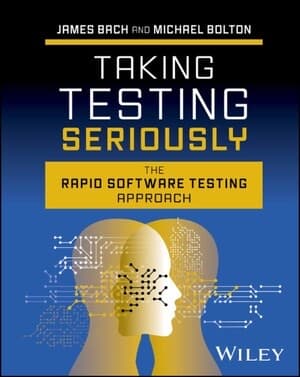
Cover image: Wiley
Taking Testing Seriously
The Rapid Software Testing Approach
Why read it?
This is by far the best book as far as software testing goes. It has helped me considerably in my testing and also my other work.
Both James and Michael have a way of distilling years of knowledge into a short phrase of testing poetry. Every page could be bookmarked, because the amount of value is just incredible. We are very fortunate in the testing biz to have access to such devoted cocahes that have put their lives work available.
Testers who want to sharpen their judgement, strategy and ability to explain their work.
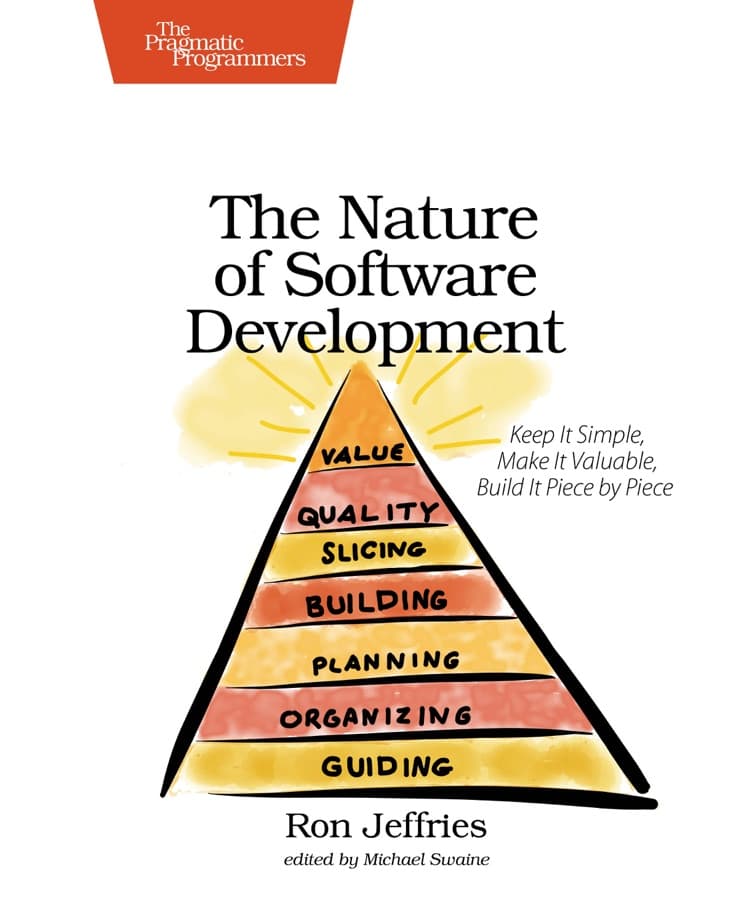
Cover image: Pragmatic Bookshelf
The Nature of Software Development
Keep It Simple, Make It Valuable, Build It Piece by Piece
Why read it?
This small, illustrated book strips software development back to a simple idea: deliver value in small, visible slices and use what you learn to decide what comes next.
I really like how simple Ron makes everything and I even emailed him about the book. The guy is so passionate about his work and he comes across as a really great person.
People who want a short, clear way to reconnect software delivery with value.
Cover image: Wiley
Lessons Learned in Software Testing
A Context-Driven Approach
Why read it?
This is a collection of hard-earned lessons rather than a single prescribed testing process. Its short entries cover test design, strategy, automation, documentation, team relationships and the realities of working under pressure.
The context-driven stance is what keeps it useful: each lesson is an invitation to think about the situation in front of you, not a rule to apply blindly. It is particularly good for team discussions because you can open it almost anywhere and find an assumption worth examining.
Testers and test leaders who want practical prompts without pretending that one method fits every context.
Cover image: Manning
BDD in Action
Behavior-Driven Development for the Whole Software Lifecycle
Why read it?
BDD in action shows what actual BDD is, and it's probably very different to what most people have been told. Forget GIVEN WHEN THEN and think more of a shared understanding with executable specifications.
Some of the tooling in this first edition has aged, but the collaboration model has not. Read it for how BDD changes the questions a team asks and the feedback it seeks, rather than as a recipe for a particular automation stack.
Teams that want BDD to improve discovery and collaboration, not merely produce automated Given–When–Then tests.
Cover image: Dorset House
Perfect Software
And Other Illusions about Testing
Why read it?
Weinberg takes apart the comforting idea that enough testing can guarantee perfect software. In its place he offers a more honest account of testing as a source of information for decisions made by people with different needs and tolerances for risk.
It is concise, humane and especially valuable when expectations around quality have become absolute or political. The book gives you better ways to discuss uncertainty without making testing sound evasive or powerless.
Anyone who needs to explain what testing can reveal, what it cannot prove and why that distinction matters.
Cover image: Pragmatic Bookshelf
Explore It!
Reduce Risk and Increase Confidence with Exploratory Testing
Why read it?
A great book for people who are new to testing in an exploratory way. A lot of good examples about how to think aboout problems and how to frame testing as an exploration
People new to testing or want creative inspiration while testing
Cover image: Profile Books
The 48 Laws of Power
A field guide to the patterns and tactics of power
Why read it?
This might be a strange recommendation for a tester and I actually saw it from a list of recommendations fom EvilTester.
The reason I'd recommend this book is because I believe testing is a 'low power' job. We are constantly challenging power and not massaging it. We are often in situations that are socially difficult and require delicacy and competence. This book helps to understand strategy and to maybe win back a bit of power and restore our reputation after being put in difficult social situations.
People who want to strategize and aim for managment and test advocacy
Cover image: Leanpub
The Agile Comms Handbook
How to Clearly, Creatively Work in the Open — Revised Edition
Why read it?
This book has helped me with my communication skills a lot. As a tester that likes to get stuck in deep, I tend to have a lot of information to relay. Thisn is especially true when debugging or figuring out an issue forn the first time
The advice in the book helped me to use a hook and bait method to attract only the people that need to know more about the problem.
Teams that need to explain evolving work clearly without waiting for a polished, final announcement.
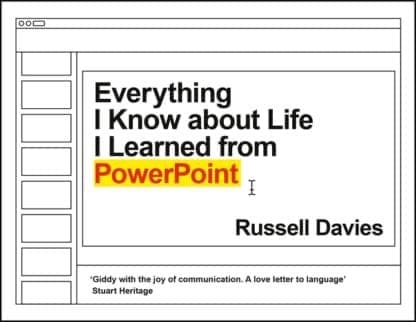
Cover image: Profile Books
Everything I Know about Life I Learned from PowerPoint
A celebration of the world's most influential presentation software
Why read it?
A very visual and fun book that I often just flick through to get random inspiration.
It is quite literally someone's life experiences and professional life painted on a strange canvas and literred with lessons to learn from.
Anyone who makes, receives or quietly endures presentations at work.